http://www.phrases.org.uk/meanings/sent-to-coventry.html
Text: Phil 2:5-11, John 12:12-19
+In the Name of Jesus+
Jesus entered Jerusalem riding on the praises of the nation. For some, he represented a powerful political revolutionary. He had the potential to wrest Israel from the tyranny of the alien Roman authority. For others, Jesus’ religious deeds worked just the wonders that they wanted to see. Some in the Palm Sunday crowd perhaps had worked alongside Him as a craftsman or met him whilst fishing in the Sea of Galilee. Others probably joined the Palm Sunday horde because that they had heard of a plot to kill Jesus. They had heard about Jesus, or might have even met Jesus, and maybe some of them had been healed by Jesus. But there is more going on here than meets the eye!
Sometimes, when we desire to accomplish certain tasks, our identity can get in the way. For example, if some of you try to enter the Royal Wedding next week, your identity may be an obstacle to securing a front row seat. Is someone here that actually does have an invitation? One has to be in the right circle of friends to enter such high profile event. But, it works the other way around as well; the rich and famous don’t necessarily have an easy time at making in the common realm. If William and Kate had strolled into service this morning, I am sure that we would have greeted them with a few stares. Leaders may have a difficult time getting out among their people.
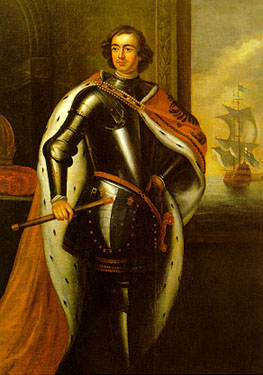 Such an obstacle has led more than a few of the rich, famous, or powerful to go undercover seeking out the life of the hoi polloi, the masses. One case in point is the 17th century czar Peter the Great, well, he hadn’t become Great yet. Leadership fell upon Peter at a time when Russia sat in a pretty backward state of affairs in comparison with rapidly modernizing Europe. Therefore, Peter temporarily relinquished his public service as czar and went incognito through Europe. He put on a servant’s cloths for a time, while he sought learning in the arts, modern ship building technique, clothing style, military strategy, and city design. Had other countries known his true identity, they may have been less willing to share this information. Or, his life may have been in danger.
His journey carried him through much of present day Holland, where we worked on the docks and studied ship building. He also visited much of present day Germany, and Austria. But what you may find even more interesting is that he studied city planning very close to home, in the then young city of Manchester. I don’t know, but he may have even past near this very area. It should be no surprise that Peter’s incognito study of Western Europe helped inaugurate a renaissance in Russian life. As a result of his brief period of incognito work, he was exulted for posterity. We still honour him for his creativity with the title the Great.
When we look at the Jesus of our Palm Sunday reading, we need to realize that he is under disguise. He is no mere political revolutionary, religious guru, or simple tradesman. He is the LORD of hosts, the Holy One of Israel. But this raises a number of problems, and this is where Paul picks up in today’s Epistle lesson. The problem presented is one which all of humanity must grapple with. God is infinite; God is eternal, omniscient, holy, and therefore inaccessible to sinful man. Humanity on the other hand, in the words of Paul, is humble. Which means that humans are bound to sin and suffering, and condemned to death. How does a humble person, a sinful person, such as you or I approach the exulted LORD? This is the problem.
The key to our problem and the key to bridging the gap between sinful man and holy God is Christ. The story of Christ, doesn’t begin with a Bethlehem stable. It goes into eternity, or as Solomon writes of Christ, “The LORD brought me forth as the first of his works, before his deeds of old.” Christ shares in the eternal godhead as the second member of the Trinity. The Athanasian Creed confesses, “He is God, begotten from the substance of the Father before all ages.” Paul states, Christ has eternally been in the form of God. In every way, he shared equality with the Father.
Instead of cherishing his Divine power and splendor, Christ relinquished them for a time. He went incognito, or became incarnate, in order to change the fortune of the entire human race. Why incognito? It was by taking human flesh, the same human flesh which you can pinch and grab a hold of, that Christ could pay for the sins which you have committed in the same flesh. Christ became fully human, but in a rather unique way. While sharing in the likeness of men, he alone demonstrated the perfect obedience required by God’s holiness.
Christ’s obedience compelled him to enter Jerusalem on Palm Sunday. It is required by the law. Exodus 23 states, “You shall keep the Feast of Unleavened Bread. As I commanded you, you shall eat unleavened bread for seven days at the appointed time in the month of Abib, for in it you came out of Egypt. …Three times in the year shall all your males appear before the Lord GOD.” This meant, that Jesus, in perfect obedience had to journey to Jerusalem for the Passover. He was compelled by the Law.

While being in the form of God, Christ humbled himself by taking the form of a servant. Jesus appeared to the senses to be middle aged man, of Jewish descent. But he claimed to be as old as eternity. Jesus’ claims were a real scandal. Paul tells us that in this man Jesus was the fullness of God: eternity, omniscience, and holiness. The infinite had gone incognito by becoming human. This claim posed a huge challenge to the religious thinking of the day. It amounted to blasphemy. If God was exulted and all the rest, then it would be paradoxical for him to enter into the sin laden world of humans. Surely God’s presence would be accompanied by angelic armies, loud trumpets, or fire. Instead, on Palm Sunday God reveals himself in Jesus whose obedience carries him to Jerusalem so that he can fulfill the Law’s required Passover celebration.
His obedience carried him further, to the point of death, death on a cross. If you were a faithful Jew, hearing the salvation story for the first time, you might gasp here. The logical conclusion of the argument is the God died. God did not even die a peaceful or glorious death; his death was brutal and inglorious. A good Jew would know the law, “Cursed is everyone who is hanged on a tree.” How could God be cursed? It is not God who is cursed, but you. Christ’s did not enter Jerusalem on Palm Sunday for His own sake. He did it for you.
 Jesus rode into the city through a crowd singing all the right words, “all glory, laud, and honor, to you Redeemer, King.” Yet, their intentions were all wrong and their city was in a state easily described as a social mess. Five days later, this same city would have the audacity to kill God. Our world is also is a social, sinful mess, sometimes more than we would like to admit. Each day, we are caught up in cutthroat competition, which promotes rivalry and self-interest. Rivalry leads to conceit, conceit leads to idolatry, and idolatry means disobedience to God’s law. Christ entered Jerusalem to redeem sinful Jerusalem and to die on behalf of your sin.
This Palm Sunday is different from the first. Unlike the first crowd, you know the outcome. You know that Easter dawn awaits you on the third day after Good Friday. Today you enter Passion Week with Christ. Christ, who was the icon of the Father, bridged the gap between himself and you by becoming man. Christ went incognito in order to conform you to His image. As a baptized child of God, you share in Christ’s perfect obedience. Therefore, you are able to treat each other in a different light. Paul exhorts the Philippians “Have this mind among yourselves, which is yours in Christ Jesus.” Palm Sunday means that Christ acts incognito through you; he inspires you to thoughts of love and actions of affection and sympathy. You no longer are caught up by cutthroat rivalry, self interest, or conceit. This Palm Sunday, you are not bystanders, you relive the events of Holy Week as obedient servants.
Peter the Great left his position as czar of Russian in order to bring back knowledge and learning to his native Russia. He took the form a servant in order to better the lives of his people. Christ left his position of Divine power and splendor in order to redeem your life. He sanctified the social nightmare left in the horrible wake of sin, and he carried it to the cross. Christ’s humble obedience becomes your obedience, which leads you to pick up your own cross and follow Him.
To close today’s sermon, I want to ask a question of you. I ask this question because it is often asked of Christians around Easter. “How can sinful humans can actually know anything true about God and eternity?” or “How can you Christians be sure that you have it right?” Again, the answer is Christ. To know anything about God, he must reveal it to us. As Jesus says to Pilate on Friday morning, “For this purpose I was born and for this purpose I have come into the world--to bear witness to the truth.” Nowhere does God make a better revelation of the truth than at the cross. He died as a revelation of His condemnation of sin, as well as a fulfillment of His promise to redeem humanity. This revelation sets the context for the Holy Week celebration; we regret our sins, and therefore cry out “Hosanna!” But we also rejoice in the Holy Son of God who went incognito to win our redemption.
Now may the Son of God, who surpasses all glory and understanding, bless your journey to the cross and unite your hearts in love.
Amen
+ Verbum Domini Manet in aeternum+


_-_Compassion_(1897).jpg)